Persistent Organic Pollutants in waste upholstered domestic seating
Information and guidance about Persistent Organic Pollutants (POPs)
Persistent Organic Pollutants (POPs) are certain chemical substances that are known to stay intact and do not break down. If waste containing these is not managed responsibly, they have the potential to cause damage to the wider environment.
The POPs found in waste upholstered domestic seating (including sofas, armchairs, upholstered dining and office chairs etc.) are usually present as a result of a flame retardant chemical, decabromodiphenyl ether (decaBDE), which has been banned since 2019 and is no longer used.
Some waste upholstered domestic seating has been found to contain levels of Persistent Organic Pollutants (POPs) above the legal limit. As a result, new compliance procedures came into effect on 1 January 2023. This meant that local authorities responsible for managing waste upholstered domestic seating were required by law to change their processes for dealing with waste potentially containing POPs.
What furniture contains Persistent Organic Pollutants (POPs)?
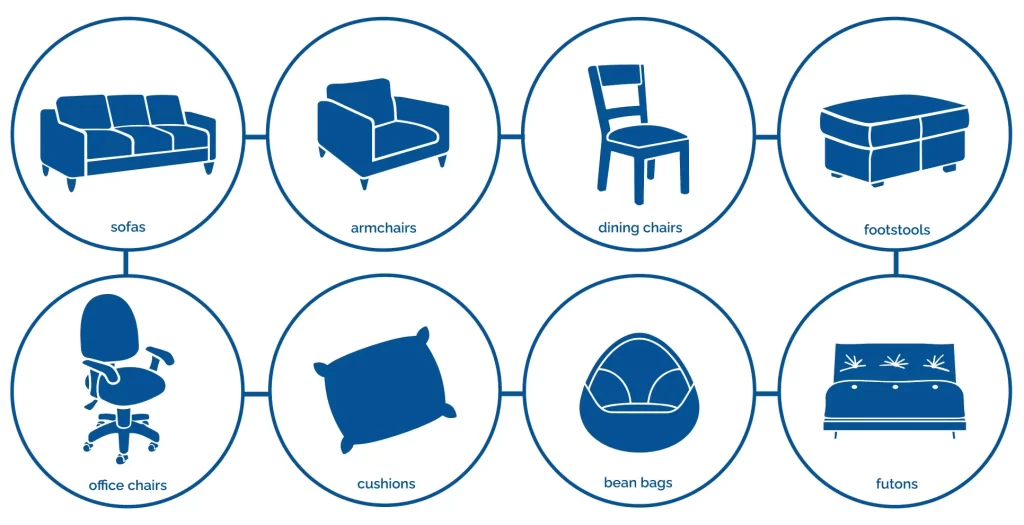
The majority of soft furnishings in your home will have fire retardants applied to them in order to meet Fire Safety standards. It is possible that some of these items will have fire retardants that contain identified POPs but not at levels that can cause concern to the environment.
Any soft furnishing item that is less than three years old (i.e. bought new after 2019) should not contain fire retardants using the current list of identified POPs. The legislation however requires that such items are all segregated at the point of disposal. This is to ensure that all items potentially including POPs are fully and safely destroyed, which is why you may be asked to place your item in a different location for disposal when you visit an HWRC.